Very interesting
Lil Wayne, Jay-Z, Beyoncé, Denzel Washington & Hollywood’s Black Illuminati Satanist.
Reply

Very interesting

 All across our nation, problems stemming from drug and alcohol addiction and chemical dependency have destroyed marriages, broken up families, put people in their graves, sent thousands upon thousands to jail, and gotten in the way of a healthy practice of Islam for tens of thousands of Muslim American’s. In this khutbatul Jum’ah are some advices about the scourge of drug and alcohol abuse in our communities. If you or someone you know is dealing with chemical dependency, or if you want to understand this problem a little better, take a listenl. Wal Allahul Musta’aan. Imam Luqman Ahmad
You ain’t really Salafi without an isnad, no matter what you’re claim is
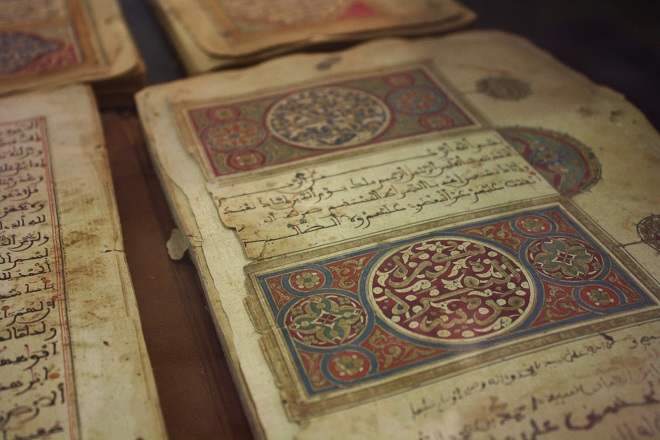 One cannot worship God with loving submission, save with sound sacred knowledge or ‘ilm. The Golden Rule in this regard was stated by Imam al-Bukhari in these terms: al-‘ilmu qabla’l-qawli wa’l-‘aml – ‘Knowledge comes before speech and action.’1 If we don’t possess sound knowledge, we could make something a part of the religion which can never be part of it – effectively introducing an innovation or bid‘ah into Islam. One hadith says: ‘Whoever does an act that we haven’t ordered, it will be rejected.’ [Muslim, no.1718] The Qur’an itself says: Do they have partners who have made lawful for them in religion that which God has given no permission for? [Q.42:21]
What follows are six points summarising the issue of what constitutes legitimate Islamic learning:
1. The crux of how one seeks sacred knowledge is best expressed by a famous maxim: ‘Indeed this knowledge is religion, so…
View original post 1,124 more words
One of the great sufi imams who was also known as a muhaddith, preacher, and Maliki jurist, Abu al-Fadl Ibn `Ata Allah al-Iskandari (d. 709) is the author of al-Hikam (Aphorisms), Miftah al-falah (The key to success), al-Qasd al-mujarrad fi ma`rifat al-ism al-mufrad (The pure goal concerning knowledge of the Unique Name), Taj al-`arus al-hawi li tadhhib al-nufus (The bride’s crown containing the discipline of souls), `Unwan al-tawfiq fi adab al-tariq (The sign of success concerning the discipline of the path), the biographical al-Lata’if fi manaqib Abi al-`Abbas al-Mursi wa shaykhihi Abi al-Hasan (The subtle blessings in the saintly lives of Abu al-`Abbas al-Mursi and his master Abu al-Hasan al-Shadhili), and others. He was Abu al-`Abbas al-Mursi’s (d. 686) student and the second successor of the Sufi founder, Imam Abu al-Hasan al-Shadhili.
was one of those who confronted for his excesses in attacking…
View original post 4,214 more words
If there no trust, everything else is futile!
 I believe that most leaders strive to be trustworthy. There aren’t too many leaders who wake up in the morning, roll out of bed and say to themselves, “Hmmm…I think I’ll try to break someone’s trust today!” Yet even in spite of our best intentions, there will be times when we damage the level of trust in our relationships. Sometimes it’s due to our own stupidity when we make choices that we know are wrong or hurtful to others. Other times we unknowingly erode trust by engaging in behaviors that others interpret as untrustworthy. Regardless of how it happens, breaking trust in a relationship is a serious matter. When a breach of trust occurs, there are five steps a leader should take to repair the relationship:
View original post 383 more words
As-salamu `alaykum wa rahmatullah

Some quotes…
It is said that a man who was overburdened by worries went to a wise man and said, “I’ve come to you because I can’t find a solution or a way out of the problems I’m in.” The wise man said to him, “I will ask you two questions and I want you to answer them both.” The man said, “Ask.”
He said, “Did you come into this world with all these problems?”
He said, “No!”
He said, “Will you leave this world taking all these problems with you?”
He said, “No!”
He said, “A matter that you did not come with, nor will you leave with… it’s more appropriate that it need not take all this energy from you nor overburden you like this. Be patient over the matters of this world, and let your gaze towards the heavens be longer than your…
View original post 156 more words

Disclaimer: This post is quite long as it deals with an extensive subject.
While writing my last post Ash’ari – What’s in a name?, I was getting a rush of many things I wanted to state, but in the interest of keeping it short I opted to not mention much of what I would’ve liked to. Doing so has bothered me a great deal and therefore I decided to follow it up with another more elaborate exposition on this issue of Salafi/Wahhabi and Ash’ari labels. I still won’t get into the issue in exhausting detail, because that would mean I should write a book instead, which I’m not worthy of undertaking such a task. However, I will seek to highlight the main points here, because I’ve been finding that for those who do not study the matter, these labels are confusing more than anything. By that I mean that…
View original post 6,347 more words
Shaykh Sa’id Abd al-Latif Foudah in his Naqd al-Tadmuriyya states:
When our scholars among the Ash‘arīs said that the apparent meanings of the texts mentioning certain ascriptions—such as hand, eye, face, shin, and so on—are not intended, they only meant the meanings that the anthropomorphists claimed were intended. The anthropomorphists claimed that the apparent meaning of eye is the well known body part, that the apparent meaning of hand is a physical limb, that face is that which is on the head and that contains two eyes, and that the shin is a body part. When the scholars of Ahl al-Sunna saw that the anthropomorphists were claiming that the Qur’ānic texts indicated these meanings and ascribed them to Allah, they refuted them and said: “These apparent meanings are not intended because there are many semantical and circumstantial elements showing that they are not intended.” What this means is that the…
View original post 258 more words
Ibn Taymiyyah wrote: ‘The saved-sect is described as being ahl al-sunnah wa’l-jama‘ah. They are the overwhelming multitude (al-jumhur al-akbar) and the great majority (al-sawad al-a‘zam). The other sects are followers of aberrant views, schism, innovations and deviant desires. None even comes near to the number of the saved-sect, let alone its calibre. Instead, each such sect is extremely small [in number] (bal qad takunu’l-firqatu minha fi ghayati’l-qillah).’
 The Qur’an goes to great lengths to stress the need and obligation of Muslim unity. For instance, it states in a celebrated verse: Hold fast, altogether, to the rope of God and be not divided. [3:102] It also says: Be not like the idolaters; who split up their religion and become sects, each party rejoicing in what it has. [30:31-32]
Given these verses; and given the many demands in the Sunnah for Muslim unity; and given the great virtue, rank and status this ummah is depicted with in the Revelation; those hadiths that speak of the Muslims splitting into seventy-odd sects, all except one destined for Hell, seem to contradict that spirit of honour and unity.
Understandable, then, why some scholars deem these hadiths on iftiraq or “splitting-up” as awkward; struggling to fit them into the general spirit of excellence the ummah is distinguished by. For what merit is there in…
View original post 2,306 more words


 The Fahlito Brigante Blog