As salaamu alaikum,
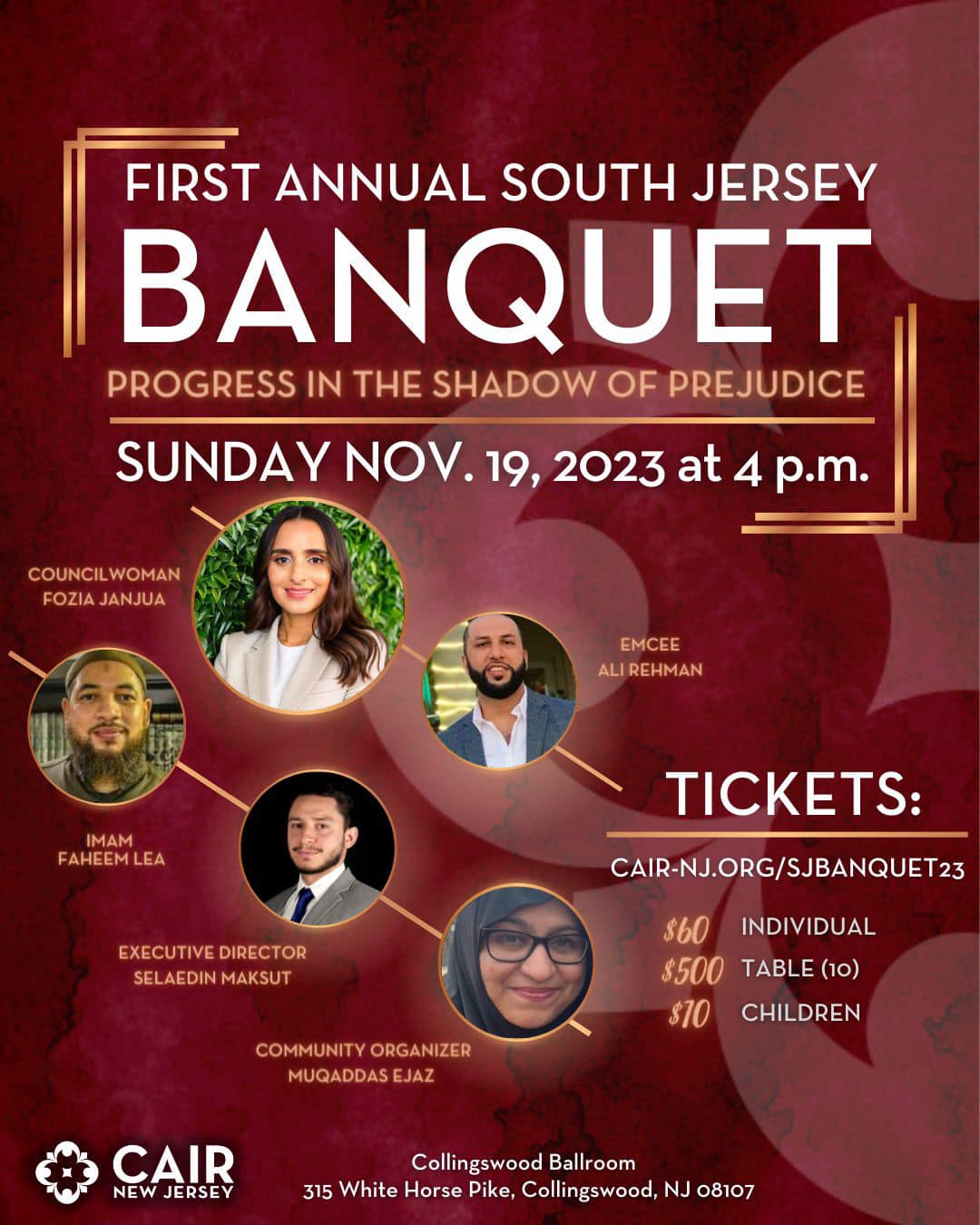
I was honored to be the keynote speaker at the 1st annual fundraising banquet for CAIR-SJ, as they are planning to open up a branch-a much needed branch-in South Jersey. The speech is below:

As salaamu alaikum,
I was honored to be the keynote speaker at the 1st annual fundraising banquet for CAIR-SJ, as they are planning to open up a branch-a much needed branch-in South Jersey. The speech is below:
“Anyone who has a share of it has an abundant share of everything good. It has been said : ‘An hour’s reflection is better than a year’s worship.’ ‘Ali, may God ennoble his face, has said: ‘There is no worship like reflection.’ And one of the gnostics; may God have mercy on them all, said: ‘Reflection is the lamp of the heart; if it departs the heart will have no light.’”
seekersguidance.org/articles/general-artices/on-reflection-fikr-imam-al-haddad-book-of-assistance/
As salaamu alaikum,
Here are some notes I took from listening to a class with Shaykh Nasir Abdus Salaam entitled “The Ranks of the Jurists.”
The maratib (rank, order) of the fuqaha (jurists):
Mujatahid mutlaq or mustaqil– the scholar/ jurist who has the ability to derive independent foundations (usul) directly from the sources (Qur’an & Sunnah), who has mastery of the tools to do so
(mastery is to know the approximately 500 ayats related to rulings in the Qur’an, and the approximately 1500-2000 Hadith related to rulings, in addition to the sciences of both of those sources, i.e., mansikh and mansukh, muhkamat and mutashabbihat, amm and khass, grading of hadith)
Mujtahid muntasib -similar the mujtahid mutlaq; follows the mujtahid mutlaq but has the ability to take his place
Mujtahid al-madhhab or al maqayyid– the scholar who is restricted to the madhhab and specializes in the school; knows all of the relied upon (mu’tamad) positions in the school
Mujtahid al-fatwa – the scholar who has the ability to look at and transmit the different legal opinions (rulings) within the madhhab
The naqil– the one who is only able to transmit/relate texts of the madhhab
A couple of beneficial quotes from Shaykh Nasir:
“What identifies the scholar is not having an abundance of information, but having mastery of the tools of knowledge.”
“Before you can ask the people of knowledge, you have to know who they are.”
I had the honor of administering the shahadah (declaration of faith for one to enter into Islam) to a brother today by way of Google Meet. It is always a delight to bring someone into the fold of Islam and to see the joy and excitement of someone ready to take this journey to Allah. I always hope that this will be the reward for me, as it comes in the hadith: Sahl ibn Sa’d reported: The Prophet, peace and blessings be upon him, said, “By Allah, that Allah guides a man through you is better for you than a herd of expensive red camels.” [Bukhari & Muslim] I recorded it for the brother to keep as a reference, and with his permission, I am sharing it here as an incentive and a reminder.

The Hanafi scholar Molla ‘Ali al-Qaari al-Harawi (d. 1014 AH) wrote a beautiful Risaalah called “al-Durrah al-Mudhiyyah fi al-Ziyaarah al-…
al-Istighaathah (part twelve): Molla ‘Ali al-Qaari recommends it
The following is the refutation of Ibn Taymiyyah by his contemporary, the master Qari and the author of the famous work on the ten Qiraat, Imam al-…
al-Istighaathah (part eleven): Al-Jazari refutes Ibn Taymiyyah on Istighaathah
Shaykh al-Islaam Ibn Hajar al-‘Asqalaani said: People became divided into groups over Ibn Taymiyyah (…) Among them were those who saw him as a …
al-Istighaathah (part ten): People rose against Ibn Taymiyyah for forbidding it

Shaykh Yoosuf b. Ismaa’eel al-Nabahaani said: Taking an intermediary (Tawassul), requesting intercession (Tashaffu’), and asking for help (…
al-Istighaathah (part nine): Tawassul and Istighaathah are one and the same

Sh. Yoosuf al-Nabhaani argues that permitting istighaathah with those who are alive only is a result of Shirk having entered one’s creed.
al-Istighaathah (part eight): Who Really Commits Shirk?
In his work Shifa’ al-Saqam, the Shafi’i scholar Taqi al-Din al-Subki breaks down what Istighaathah really is and why it isn’t Shirk.
al-Istighaathah (part seven): Al-Subki Breaks It Down
 The Fahlito Brigante Blog